
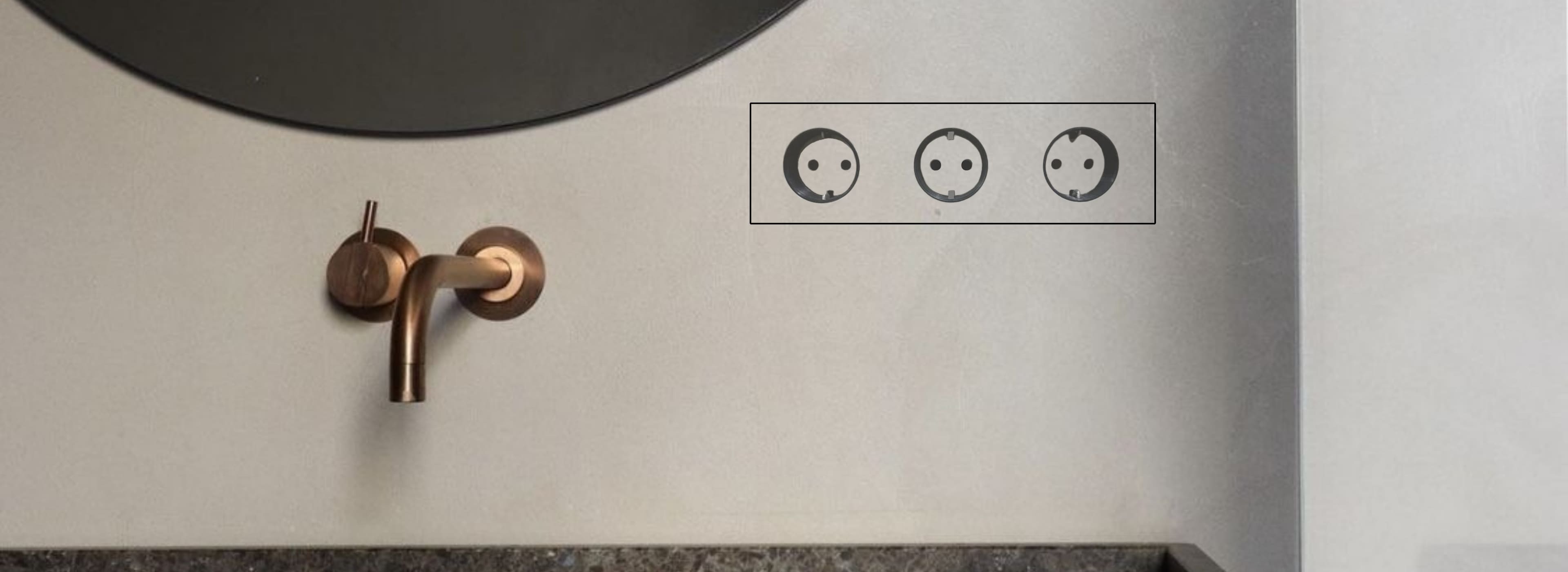
Tile-Integrated Hidden Electrical Solutions for Tiled Walls
-

 Vendor:EdPlitRegular price From €59Regular price
 -

 Vendor:EdPlitRegular price From €59Regular price
 -

 Vendor:EdPlitRegular price From €9.70Regular price
 -


-

 Vendor:EdPlitRegular price €21Regular price


You’ve created a minimalist interior design, but one issue often remains unsolved: standard electrical fixtures. Outlets, switches, and thermostats interrupt tiled surfaces with visible frames, disrupted tile patterns, and components that protrude from the wall. This becomes especially noticeable in large-format tile installations and minimalist bathroom or kitchens, where surface continuity is an important part of the overall wall finish.
Our invisible electrical system for tiled walls was designed to combine standard electrical functionality with a tile-integrated installation approach. The hidden electrical system for tiled walls keeps outlets, switches, and thermostats functional while making them part of the finished tiled surface.
From exhaust fans to tile flush electrical system, EDPLIT develops concealed solutions that integrate functional elements into tiled surfaces.
What Is a Tile Flush Electrical System?
The tile flush electrical system is an invisible electrical system for tiled walls designed to integrate power outlets, switches, thermostats, and other electrical elements into the tile surface. The key components of the electrical systems are installed inside the wall, while the visible covers are finished with precisely cut sections of the original tile. Precise tile preparation is required for this installation method. Specialized tile cutting tools for hidden light switches and sockets help create accurate openings for flush integration with the surrounding tiles.
How Does It Work?
EDPLIT applies the same concealed integration approach across different products, including tile-integrated access panels for plumbing, where functional components are installed while maintaining a continuous tiled surface.
- First, the mounting base is installed inside the wall. Concealed mounting components are integrated into the wall to create a secure and solid foundation for the electrical fixture that comes next.
- Second, the electrical mechanism is installed into the mounting base. The hidden electrical system for tiled walls is installed through traditional concealed electrical installation methods.
- Third, the tile is installed as the finished wall surface. A precisely cut section of the original tile is incorporated into the visible operating element. Thus, it sits level with and blends in with the surrounding tiles to become nearly invisible. We make all concealed electrical systems for tiled walls so they can be part of any tile artistic composition.
Without requiring physical buttons that create visual eyesores, the system remains fully functional. It’s right there, effectively hidden behind the tile surface. It provides the same electrical functionality and performance as conventional options.
What Makes It Different from Standard Electrical Solutions
Hidden electrical solutions for tiled walls from EDPLIT are discreet and modern, designed for interiors, where it is important to maintain free wall space. Now, let’s see what makes them stand out.
|
Feature |
Standard electrical solutions |
EDPLIT tile electrical system |
|
Wall integration |
Electrical fixtures are mounted on top of the finished wall surface using visible faceplates and frames. |
The electrical system is integrated into the wall in the process of installation. Thus, the visible operating element blends in the finished tile surface. |
|
Surface finish
|
Plastic, metal, or glass covers that become eyesores after installation.
|
The visible element is finished with a precisely cut piece of the original tile. It totally matches the wall material. |
|
Tile interaction
|
Tiles are cut around the electrical fixture, so the visible transitions are seen between the tile and the frame.
|
The electrical fixture is installed as part of the tiled wall assembly rather than on top of it (the wall finish remains visually continuous). |
|
Visual continuity
|
You can actually see all the frames, edges, and protruding covers that interrupt the tiled wall surface. |
The tiled surface remains visually continuous, without external frames or covers. |
|
Compatibility with large-format tiles |
Larger tiles often increase the visual contrast between the electrical fixture and the wall finish. |
The electrical element uses the same tile surface, so it lets us maintain material consistency regardless of tile size. |
|
Visible materials |
It’s the manufacturer's cover plate material and color that defines the finished appearance of the product. |
The finished look is defined by the same tile used on the surrounding wall. |
|
Frame construction |
Requires an external decorative frame or cover plate. |
No external frame is required. |
Tile Flush Electrical System Components
The tile flush electrical system from EDPLIT includes a range of invisible electrical solutions for tiled walls. We install each using the same concealed mounting principle and finish it with a precisely cut section of the original tile:
- Sockets. Tile flush sockets combine standard electrical functionality with an integrated installation approach. Once installed, they blend in with the surrounding tile instead of sticking out from the wall.
- Light switches. Switches provide standard control of light while being integrated into the tiled wall. No need for a visible frame.
- The sockets + switches combo. The combination of sockets and switches integrated into the tile combines both functions within a single concealed installation, finished with the same tile as the surrounding surface.
- Thermostats. Tile thermostats are a mix of temperature control and concealed wall integration. The thermostat mechanism is integrated into the wall, while the visible unit is finished with the same tile as the wall.
EDPLIT solutions, including tile insert flush plates and other concealed systems, are designed for integration with ceramic, porcelain, and stone tiles.


